Ledger Tracking and Market Line Changes in Regulated Gambling Industries
Petra Bennett · Oct 9, 2026

Ledger Tracking and Market Line Changes in Regulated Gambling Industries
Financial records in regulated wagering markets provide detailed snapshots of transaction volumes, payout structures, and operator cash flows that often align with movements in betting lines across sports and casino products. These ledgers capture daily settlements, bonus redemptions, and reserve adjustments while line moves reflect real-time shifts in odds driven by bet volume, injury news, or regulatory announcements. Observers note that cross-referencing these two data streams reveals patterns in how markets absorb information and adjust risk exposure.
Core Components of Ledger Systems
Operators maintain separate accounts for player deposits, settled wagers, and promotional liabilities, and each entry carries timestamps that allow matching against specific line adjustments posted by oddsmakers. In practice, a sudden surge in handle on one side of a football spread generates immediate ledger entries that signal the need for line movement, while reserve calculations track the operator's exposure before and after the shift occurs. Data from multiple jurisdictions shows these systems operate under strict reconciliation rules that require daily audits and variance reporting to licensing authorities.
How Line Moves Interact with Recorded Transactions
Betting lines function as dynamic pricing mechanisms that respond to incoming wagers, and each adjustment leaves a traceable footprint in the financial records once bets are accepted at the new price. When a line moves two points on a basketball total, for instance, the ledger reflects both the volume placed before the change and the altered liability created afterward. Researchers have documented that rapid line movements often coincide with spikes in transaction velocity, particularly when large wagers or syndicates target perceived inefficiencies. This relationship becomes visible through timestamped entries that link specific odds changes to corresponding cash-flow impacts.
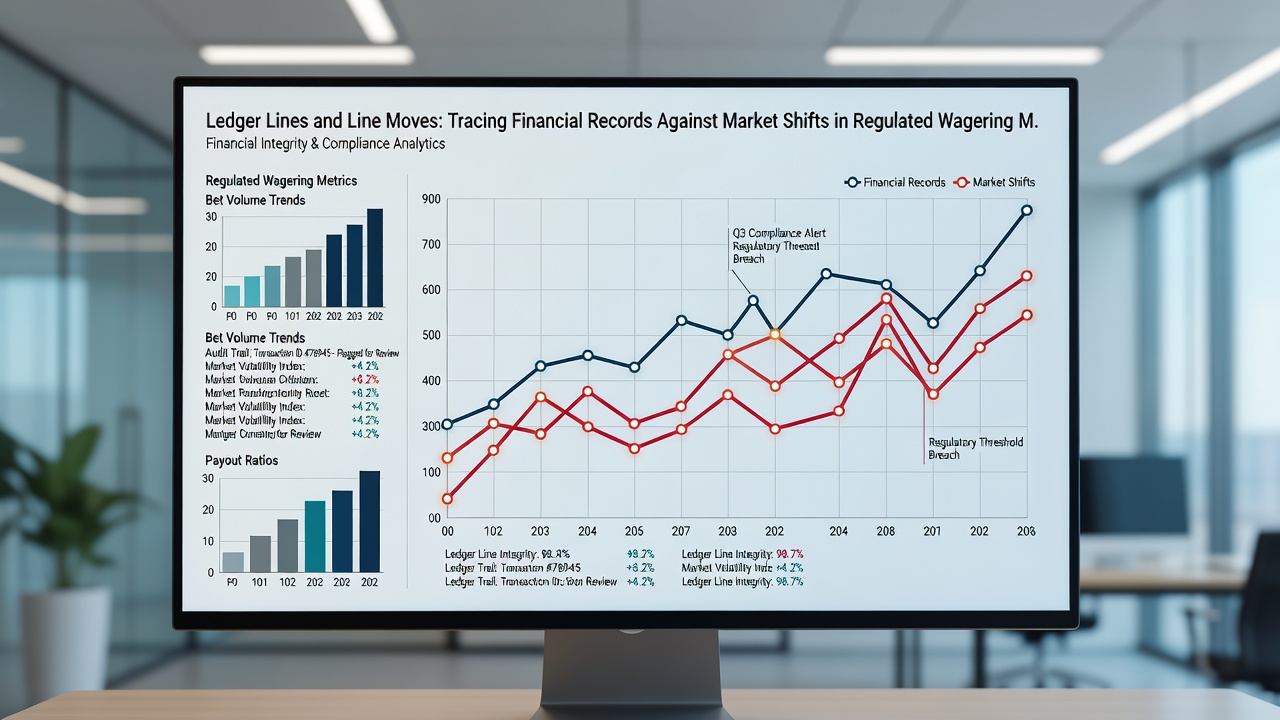
Regulatory frameworks in several regions require operators to retain granular records that capture both the pre-move and post-move pricing, which enables investigators to reconstruct how market shifts influenced overall profitability during specific periods. In October 2026, reports from North American and European markets indicated that line adjustments on major league events frequently triggered measurable changes in daily settlement volumes within regulated platforms.
Regional Regulatory Approaches to Record Matching
Different licensing bodies impose varying requirements on how operators must document the connection between financial entries and line activity. The American Gaming Association has published summaries showing that U.S. state regulators increasingly request matched datasets that pair transaction logs with odds history to verify compliance with integrity standards. Meanwhile, Canadian provincial frameworks emphasize continuous monitoring of reserve levels relative to line volatility, requiring operators to flag instances where rapid market movements exceed predefined thresholds. Australian oversight bodies similarly mandate that ledger extracts accompany any market-shift notifications submitted after significant events.
These differing approaches create a patchwork of reporting formats, yet each system shares the goal of enabling authorities to trace how financial outcomes correspond to observable changes in betting lines. Academic analyses from institutions studying gaming economics have examined multi-year datasets that demonstrate consistent correlations between line volatility and subsequent ledger adjustments across licensed operators.
Analytical Techniques Applied to Combined Datasets
Specialized software tools now allow compliance teams to overlay ledger entries onto timelines of line movements, producing visualizations that highlight periods of elevated activity. Analysts examine metrics such as average bet size before and after each move, along with the distribution of winning versus losing wagers recorded in the accounts. When anomalies appear, such as unusually large positions placed immediately prior to a line shift, investigators can drill into the associated transaction records to determine whether internal controls functioned as intended. Studies conducted on regulated markets have identified that these combined analyses help distinguish routine market responses from potential irregularities that warrant further review.
Conclusion
Tracing financial records against market line movements supplies regulators and operators with concrete evidence of how regulated wagering markets process information and manage risk. The integration of timestamped ledger data with documented odds changes creates an auditable trail that supports both operational oversight and broader market integrity efforts across multiple jurisdictions.